
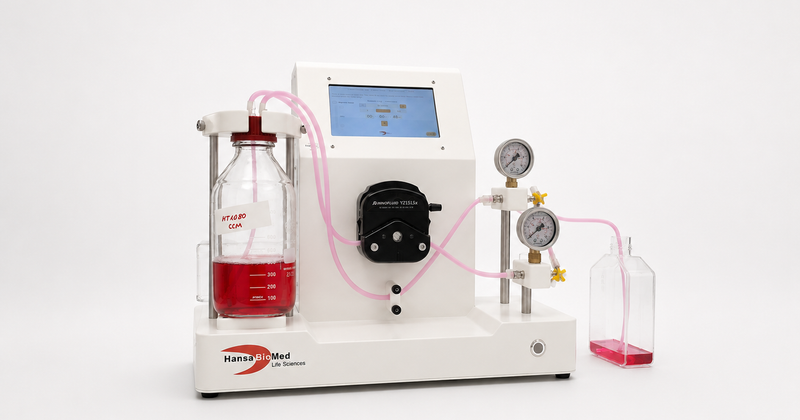
Beyond First Impression: The Reusability of TFF Cartridges
TFF cartridges can be used multiple times without significant deterioration in their yield and purity performance metrics.
Introduction
Owing to its beneficial features such as versatility, easy scale-up, and sterility, TFF became a valuable alternative to isolate EVs in the recent years. After its introduction into the field of EVs around mid-2010s, its widespread dissemination in research labs resulted in being included in MISEV2023 guidelines as an alternative method to concentrate EVs [1,2].
Beside its capability to increase the yield and scale of EV production while preserving their integrity and functionality, TFF also minimizes the cost of production owing to its reusability [3,4]. In this tech note, we demonstrate the technical aspects of the reusability including the steps to follow for preparing a TFF cartridge to a next use as well as its stability in performance over each reuse.
Materials and Methods
In this study, we gathered the isolation results of EVs derived from multiple batches of HEK293 and adipose tissue mesenchymal stem cell (MSC) cultures. For each cell type, a single TFF-EVs-S unit was repeatedly used. In between each use, each cartridge is washed following our optimized protocols. Accordingly, the filters are washed with 0.5N NaOH following the filtration process to remove contaminants from hollow fibers. After this step, abundant MilliQ water is passed through the filters to remove chemical traces. The filters are then stored at room temperature to be dried, with all the ports open.
Characterization of the isolated EVs are performed following MISEV2023 guidelines. The size and concentration measurements are performed with Zetaview by Particle Metrix. The protein content is quantified with BCA assays. Marker assessment is done through a double-sandwich ELISA assay detecting CD9, CD63, CD81, and Alix as positive markers and Calnexin as a negative marker.
Results
1. Total EV Yield
2. Size Distribution
3. Marker Assessment
Conclusion
The characterization results demonstrate that TFF cartridges are reusable multiple times with satisfactory performance. Their long shelf life ensures extended use through multiple isolations, where the minor performance differences can be associated with the biological variation in the starting material. It is worth mentioning that the number of reuse is not certain but dependent on many factors including the sample type, viscosity, storage conditions, or pretreatment steps. However, reusability of TFF is still one of many factors making it advantageous over other alternatives for EV isolation and concentration.
References
[1] Busatto, S., Vilanilam, G., Ticer, T., Lin, W.-L., Dickson, D. W., Shapiro, S., Bergese, P., & Wolfram, J. (2018). Tangential Flow Filtration for Highly Efficient Concentration of Extracellular Vesicles from Large Volumes of Fluid. Cells, 7(12). https://doi.org/10.3390/cells7120273
[2] Welsh, J. A., Goberdhan, D. C. I., O’Driscoll, L., Buzas, E. I., Blenkiron, C., Bussolati, B., Cai, H., Di Vizio, D., Driedonks, T. a. P., Erdbrügger, U., Falcon‐Perez, J. M., Fu, Q., Hill, A. F., Lenassi, M., Lim, S. K., Mahoney, M. G., Mohanty, S., Möller, A., Nieuwland, R., . . . Witwer, K. W. (2024). Minimal information for studies of extracellular vesicles (MISEV2023): From basic to advanced approaches. Journal of Extracellular Vesicles, 13(2). https://doi.org/10.1002/jev2.12404
[3] Jo, H. Y., Kang, S. J., Kim, G., Gwak, S., Baek, G., & Rhee, W. J. (2025b). Plant‐derived extracellular vesicles: Current status and challenges for developing a new paradigm in therapeutics development. View. https://doi.org/10.1002/viw.20240115
[4] Chinnappan, M., Srivastava, A., Amreddy, N., Razaq, M., Pareek, V., Ahmed, R., Mehta, M., Peterson, J. E., Munshi, A., & Ramesh, R. (2020). Exosomes as drug delivery vehicle and contributor of resistance to anticancer drugs. Cancer Letters, 486, 18–28. https://doi.org/10.1016/j.canlet.2020.05.004